
You own a website with hundreds — maybe thousands — of historical documents sitting on it. Letters from a great-grandfather's regiment. Oral history transcripts from a community elder project. Manuscript scans from a regional society. Period photographs with hand-typed captions. The traffic reports tell a story you already suspect: visitors arrive via long-tail search, scan thirty seconds of one paragraph, and leave. The archive exists. It just doesn't circulate. AI voice historical archives technology is the structural fix for that problem — not because audio is trendy, but because text-only access caps engagement at the speed of silent reading on a screen.
This is a strategy article, not a technology tour. Below is what works, what fails, and a 12-week sequence for moving an archive from silent to searchable without burning budget on documents nobody reads.
Table of Contents
- Why Text-Only Archives Plateau at 30 Seconds of Engagement
- AI Voice Synthesis vs. Hired Narrators — Where Each Wins
- Matching Voice Platform Capabilities to Archive Content Type
- Structuring Audio for Discovery, Not Just Playback
- Five Implementation Mistakes That Quietly Kill Audio Archive Projects
- Measuring Whether Audio Is Actually Lifting Engagement
- A 12-Week Plan to Move Your Archive From Silent to Searchable
Why Text-Only Archives Plateau at 30 Seconds of Engagement
The friction is structural, not editorial. A historical document published as text-on-a-page offers exactly one path to consumption: the visitor reads it silently, on whatever device they happened to land on, in whatever attention state they happened to bring. That is a single-pathway archive. Bounce rates on these pages are not a content quality problem — they are a format constraint. The same document, reachable through a second pathway, reaches a different audience entirely. That is what voice technology ancient records workflows actually deliver: a parallel discovery layer.
Four specific failures explain why text-only collections stall:
- Single-pathway consumption. A page that requires reading excludes the commuter, the visually impaired visitor, the auditory learner, and the visitor who wants to listen while working. There is no alternative entry point. According to Berkeley Lab's IRENE project, researchers spent more than 20 years on the specific problem of converting silent records into sound — because adding the audio pathway creates a fundamentally new mode of access, not a redundant one.
- Cognitive load on archaic language. Period documents use unfamiliar grammar, spellings, and vocabulary. A visitor reading 18th-century legal correspondence works harder than a visitor reading a modern article on the same topic. Audio offloads the decoding to a narrator. The brain processes spoken archaic English more fluently than written archaic English because rhythm and intonation supply context the silent reader has to reconstruct line by line.
- Search ceiling on non-text assets. Audio recordings, handwritten manuscripts, and image-based documents are invisible to search engines until something transcribes them. According to the Coalition for Networked Information, the University at Buffalo's UB-WBFO Radio Archive — over 2,000 hours of recorded broadcast — was effectively undiscoverable to search until AI-assisted transcription generated descriptive metadata for it. Until audio becomes text-indexed and text becomes audio-accessible, half of the archive's potential value is locked behind format.
- Accessibility exclusion. Screen-reader users get a flat monotone reading text that was never designed for narration. Auditory learners get nothing usable. Mobile users on weak connections wait for a wall of text to render before they can decide whether to invest more time. Each of those is a real visitor your analytics counts as a bounce.
An archive that exists only as text is an archive most of your visitors will never finish reading.
Reframe audio not as "another format" but as the second discovery pathway. The CNI also documents one center using the SpeakEZ system to make 20,000+ oral history interviews searchable — recordings that had existed for decades but were practically dead until AI built the access layer over them. That is the pattern: the audio existed; the access didn't. AI voice historical archives workflows close that exact gap, and they do it at a scale human narration alone cannot reach.
AI Voice Synthesis vs. Hired Narrators — Where Each Wins
Voice technology ancient records projects rarely come down to "AI versus humans." They come down to which work belongs in which lane. AI voice is the only economically viable starting point for any archive over a few dozen items. Human narration is the targeted upgrade for specific high-value content where dramatic delivery moves the listener. Treat the two as a stack, not a competition.
| Criterion | AI Voice Synthesis | Human Narration |
|---|---|---|
| Throughput | Hours of audio per day | Limited to recording session capacity |
| Scaling with archive growth | Generates new audio as collection expands | Re-book narrator per addition |
| Voice consistency over years | High — cloned voice reusable indefinitely | Depends on narrator availability |
| Pronunciation control | SSML tagging for exact phonetic specification | Briefing required per session |
| Multi-language coverage | 49+ languages on leading platforms | One narrator per language, per project |
| Emotional / dramatic delivery | Improving but limited for theatrical readings | Natural strength — context-aware |
| Best fit content | Reference material, summaries, large-volume transcripts | Featured exhibits, signature collections |
The 49+ language figure comes from Sonix, a vendor in this space, and should be read as a directional capability ceiling rather than a neutral benchmark.
The practical conclusion: AI voice is the entry point for any archive over roughly 50 documents. Below that volume, the cost differential narrows and human narration may compete on quality alone. Above it, the math forces AI into the workflow whether the institution likes the tradeoff or not. The decision then becomes which collections deserve the human upgrade later.
The SSML advantage is the reason this matters for archival work specifically. According to Historica.org, Speech Synthesis Markup Language lets you specify pronunciation once and apply it across thousands of generated files. For archives heavy in proper nouns — place names, period figures, foreign-language quotations, Latin legal terms — that is the difference between a usable collection and one that mispronounces "Worcestershire" four different ways across one oral history. A human narrator must be coached per session. A tagged AI workflow inherits the corrections automatically.
Voice cloning collapses the dichotomy further. Modern platforms let you clone a single narrator's voice from a short sample and generate unlimited additional audio in that voice. You can hire one narrator for one session, capture the voice, and then scale generation programmatically across the rest of the collection. The hybrid is now the default workflow for institutions that care about a "house voice" but cannot fund hundreds of recording hours.
Matching Voice Platform Capabilities to Archive Content Type
Platform choice should be driven by archive content type, not by general "best voice quality" reviews aimed at podcasters. A platform that wins on conversational naturalness for marketing voiceover may underperform on Revolutionary War correspondence where every third word is a proper noun. Treat this as a practitioner evaluation, not a feature dump.
| Platform | Voice Library | SSML Control | Voice Cloning | Best Archive Match |
|---|---|---|---|---|
| Google Cloud TTS | 220+ voices | Full SSML | Custom Voice (paid) | Multilingual collections |
| Amazon Polly | 100+ voices | SSML + lexicons | Brand Voice (enterprise) | High-volume reference |
| ElevenLabs | Curated library | SSML-equivalent | Instant + Professional | Signature narrator |
| Microsoft Azure Speech | 400+ neural voices | SSML + lexicons | Custom Neural Voice | Enterprise / scientific |
| Whisper (open-source) | Transcription only | N/A | N/A | Audio-to-text input prep |
Whisper appears in this table because it solves the input side of the historical archive problem. According to Historica.org, Whisper — released by OpenAI in 2022 — handles diverse accents and dialects and supports multi-language input within a single audio file. That makes it the standard tool for converting deteriorated period recordings into clean text, which can then be re-narrated by modern voice synthesis for distribution. A serious archive workflow uses both directions: Whisper to bring old audio into the searchable layer, TTS to push old text into the audible layer.
The wrong platform doesn't cost you money — it costs you the visitor who hears Charlemagne pronounced like a fast food order.

Four platform-selection principles matter more than feature counts.
Pronunciation accuracy is the deciding factor for historical content. A platform that mispronounces "Massachusetts" is fine for blog posts; the same platform mispronouncing "Massachusetts" across a Revolutionary War archive destroys credibility on every clip a visitor hears. SSML support is non-negotiable for archives with proper nouns, Latin, archaic English, or non-English source quotations. Test pronunciation accuracy on a 20-document sample before committing to a platform — never on a marketing demo.
Voice cloning changes the equation for archives with a "house voice" requirement. Museums and university archives often want consistent narration across thousands of items. Cloning solves it: record one session, generate unlimited audio. According to Museumfy, the Museum of Art & History in Geneva built bilingual AI audio guides delivering real-time descriptions in French or English with historical context pulled from a database. The same workflow logic applies to a website archive — one cloned voice, programmatic generation across thousands of items, consistent listener experience.
The explainable AI gap. Museumfy specifically calls out that current commercial voice platforms operate as black boxes. Archivists cannot validate why a model interpreted a phoneme a particular way, and researchers are pushing for explainable AI to make these decisions transparent and verifiable. Until that arrives, treat platform output as draft material requiring archivist review, not finished output that ships untouched.
Counter-evidence to surface honestly. Models specifically trained on historical materials don't yet exist at commercial scale. Museumfy notes that most platforms train on contemporary speech, which means period vocabulary, pronunciation conventions, and rhetorical patterns are reconstructed from modern reference frames. Auditory exploration history ai workflows accept this gap and compensate for it with SSML lexicons and human review on the first batch — they don't pretend the gap isn't there.
Structuring Audio for Discovery, Not Just Playback
Generating audio is the easy 20% of the project. Making that audio findable, navigable, and indexable is the 80% that determines whether the investment compounds or sits unused. Six structural rules separate archives that produce engagement from archives that produce orphan MP3s.
- Generate 2–4 minute summaries before generating full readings. Visitors decide within thirty seconds whether to invest more time. A 40-minute audiobook of a manuscript intimidates; a three-minute curated summary invites. Use the summary as the discovery surface and link out to the full reading as a depth option for committed listeners. This mirrors the principle behind UB's metadata work documented by the Coalition for Networked Information — the description is what gets found, the full asset is what gets consumed once found. Auditory exploration history ai works only when discovery and depth are layered, not collapsed into one long file.
- Apply SSML tags to every proper noun, foreign phrase, and archaic term before generation. Build a project-wide pronunciation lexicon. Tag "Worcestershire," "Goethe," "Pétain," "phthisis," and "habeas corpus" once, then reuse the lexicon across every file. Without this step, the same name will be pronounced four different ways across one collection, and the inconsistency will surface to listeners faster than any other quality issue. Historica.org documents this as the single highest-leverage step in archival audio production — every later file inherits the lexicon.
- Segment by collection theme, not by document length. Break a long oral history into 5–10 minute segments tied to themes — childhood, wartime, postwar — rather than arbitrary time chunks. Listeners abandon files longer than roughly 12 minutes at sharply higher rates in practice, and thematic segmentation also creates better deep-link targets for search. A search query for "1944 Pacific theater" should land on the relevant 7-minute segment, not a 90-minute parent file.
- Sync transcripts to audio playback with timestamp anchors. Highlight spoken text as it plays. This serves three audiences simultaneously: auditory learners who skim while listening, visual learners who follow along, and screen-reader users who navigate by transcript. Museumfy treats synchronized transcripts as best-practice standard in archival audio platforms — not an accessibility add-on but a core feature that expands the addressable audience for every file you publish.
- Submit audio with
<audio>schema markup and transcript URLs in the sitemap. Google indexes audio pages separately from their parent text pages. An archive page with audio + transcript + schema can rank for spoken-content queries that the text-only version cannot reach. AI voice historical archives strategy that ignores schema markup is leaving the entire audio-search surface uncaptured. Cross-reference the schema.org AudioObject specification when implementing. - A/B test voice selection per content category. A neutral female voice may underperform on Civil War correspondence and excel on suffrage-era speeches. Test two voices per collection on a 10% audience sample for two weeks before committing the full collection. Voice fit is content-dependent and not transferable across collections — what wins on testimony will lose on legal documents. If the archive serves multiple language audiences, the same testing logic applies to multilingual generation with AI Dubbing where programmatic dubbing across languages extends the same A/B framework into language fit, not just voice fit.
The discipline behind these six rules is what separates the archives that compound traffic year over year from the ones that publish a hundred audio files and watch the dashboard go flat.
Five Implementation Mistakes That Quietly Kill Audio Archive Projects
Audio archives rarely fail because the technology was wrong. They fail because the implementation skipped one of five steps that look optional and aren't. Each of these mistakes is recoverable — but only if you catch it before the production pipeline scales the error across thousands of files.

- Generating audio for 100% of the archive on day one. The instinct is to "do it all" because AI makes scale trivial. This is the most expensive mistake in the category. You burn processing budget on documents that get fewer than ten visits a year, and you have no engagement data to tell you which collections deserved the investment in the first place. The corrective: identify the top 20% of documents by historical traffic, citation count, or strategic importance. Generate audio for those first. Measure engagement lift over 60 days. Expand only when the data justifies it. The University at Buffalo project documented by the Coalition for Networked Information explicitly took this prioritized approach with their 2,000-hour audio archive rather than batch-processing everything at once.
- Switching narrator voices mid-collection. A user listening through a five-part oral history hears voice A on parts one and two, voice B on part three, voice C on parts four and five — because three different staff members generated audio with whatever default was active when they sat down. The cognitive break ends the session. The corrective: lock one voice per collection in your project documentation. If you use voice cloning, store the cloned voice ID and require it for every generation in that collection. Treat voice ID as project metadata, not a runtime choice.
- Setting audio to autoplay on page load. This is a UX mistake masquerading as an engagement strategy. Autoplay triggers immediate exits on mobile, fails browser autoplay policies in Chrome and Safari without a user gesture, and creates an accessibility violation when a visitor's screen reader is already speaking and your audio starts on top of it. The corrective: opt-in playback only. A visible play button with a short preview waveform converts at higher rates than autoplay does in practice — and respects the visitor's attention rather than ambushing it.
An archive that autoplays at a visitor is an archive that teaches them to bounce.
- Publishing audio without a transcript. An audio-only archive page is a single-format trap. It excludes deaf and hard-of-hearing visitors, fails WCAG 2.1 accessibility requirements, and forfeits the SEO value because search engines cannot index spoken content directly. The corrective is non-negotiable: every audio file ships with a synchronized transcript. The transcript is the SEO asset; the audio is the engagement asset; both are required, not either-or. If transcript production is the bottleneck, run Whisper on the generated audio and clean the output rather than skipping the step.
- Skipping pronunciation review on the first 10 files. Trusting the platform's default output for historical names guarantees errors. The first ten files of any new collection should be reviewed line-by-line by someone familiar with the period — an archivist, a historian, a domain specialist. Errors found at file 1 prevent errors propagating to file 1,000. This review is also where the SSML pronunciation lexicon gets built; do it once correctly and the rest of the collection inherits the corrections. Museumfy specifically calls out the gap between commercial models and period-specific accuracy as a known weakness — voice technology ancient records workflows that skip this review step ship that gap straight to the listener.
The pattern across all five mistakes is the same: shortcuts taken at the start compound into errors that are expensive to unwind at scale. Spend the first month doing the small, careful version. The next eleven months scale on top of that foundation.
Measuring Whether Audio Is Actually Lifting Engagement
Most archive owners track pageviews and time-on-page. Both are insufficient for AI voice historical archives work. A visitor who listens to a four-minute clip while reading email registers as four minutes on page — but the engagement is real, just unmeasured by traditional analytics. A visitor who plays a clip for three seconds and abandons also registers as three seconds — same direction, opposite reality. Without instrumentation, you cannot distinguish them, and you cannot make data-driven expansion decisions.
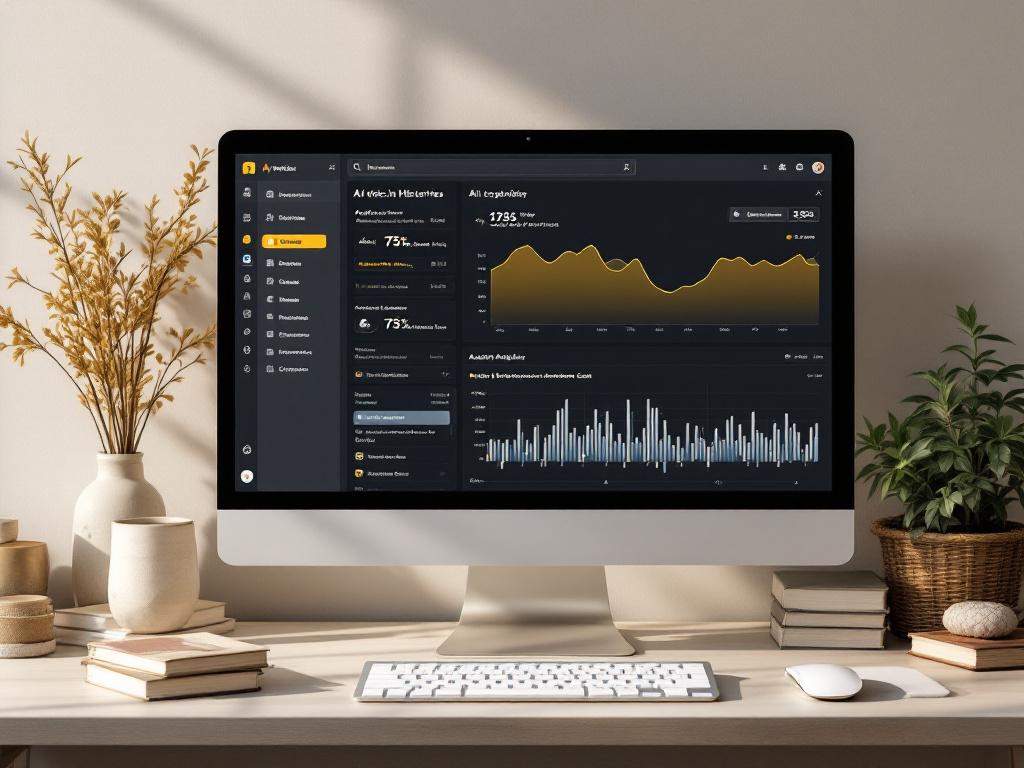
The five events to instrument in Google Analytics 4 (or your equivalent platform):
| Event | What It Captures | Why It Matters |
|---|---|---|
audio_play | Visitor pressed play | Adoption signal — % trying audio |
audio_25_percent | Reached 25% of clip | Filters accidental plays |
audio_75_percent | Reached 75% of clip | Strong completion signal |
audio_complete | Finished playback | Length validation |
transcript_scroll | Scrolled transcript while audio played | Cross-modal use; highest-value visitor |
Read the data as movement, not as fixed thresholds. The research base on archival audio engagement does not yet support universal completion-rate benchmarks, and any source claiming "the average is X%" is generally selling something. What does work:
- If
audio_playrate is rising month-over-month, your placement is improving — the play button is being seen and trusted. - If
audio_25_percentis high butaudio_75_percentis low, your clip lengths are wrong. Segment shorter and re-test. - If
transcript_scrollrate is high, you are attracting the deep-research visitor. These convert to return visits at the highest rate in practice. Optimize for them; they are the cohort that justifies the entire investment.
Tie measurement back to the prioritization principle from the implementation section. The data tells you which collections deserve audio expansion and which should be deprioritized. Without this loop, you are guessing — and the Coalition for Networked Information's documentation of multiple institutional AI archive projects emphasizes measurement-driven scaling rather than uniform rollout. The institutions that scaled successfully measured first.
Counter-evidence to keep in view: vanity metrics distort the picture. A 90% completion rate on a 30-second clip is meaningless if visitors are not returning. Track return-visitor rate among audio users versus non-audio users as the durable signal. If the gap is not widening over 90 days, audio is novelty, not value, and the response is to revisit voice selection, summary length, or placement — not to add more audio.
The qualitative layer matters as much as the quantitative one. Quantitative metrics tell you what; user feedback tells you why. Run a five-question survey on audio-enabled pages quarterly: did you listen, did you finish, did the voice fit, what did you wish was different, would you return. Pair the survey with session recordings on a sample of audio sessions. The combination — events, survey, session replay — is what surfaces the issues your dashboard alone will miss.
A 12-Week Plan to Move Your Archive From Silent to Searchable
Every task below is specific enough to put on a calendar tomorrow. No abstract advice. The sequence assumes one project lead and a small team, working part-time on the implementation while the rest of the site continues to operate.
Weeks 1–2: Audit and Prioritize
- Export your full archive inventory to a spreadsheet: title, collection, format (text / image / audio), word count, pageviews trailing 12 months, citation count if available.
- Sort by pageviews × strategic importance. Take the top 20%. This is your Phase 1 set.
- For each Phase 1 item, classify: does it benefit from narration (testimony, correspondence, speeches, narrative documents) or is it reference material that does not (data tables, indexes, finding aids)? Drop reference material from the audio queue.
- Document the target listener profile: device split (mobile vs. desktop from your own analytics), search intent, accessibility needs. This profile drives every later decision — voice selection, segment length, transcript format.
Weeks 3–4: Platform Trial and Voice Selection
- Open trial accounts on at least two platforms from the platform table. Pair an institutional default (Google Cloud or Azure) with a cloning-strong option (ElevenLabs).
- Generate the same three to five source documents on each platform.
- Run an internal blind test: have five colleagues rate naturalness, pronunciation accuracy, and fit to content type. Record the winner per content type. Correspondence may pick differently than oral history.
- Calculate projected monthly cost at full Phase 1 scale on each platform using the API pricing for programmatic generation across the full Phase 1 set. Pick on combined quality and cost, not either alone.
Weeks 5–7: Pronunciation Lexicon and Production Pipeline
- Have a domain expert — archivist, historian, period specialist — review the first ten generated files line by line. Log every mispronunciation. This is where auditory exploration history ai workflows either earn quality or ship errors.
- Convert the log into an SSML lexicon file. This is the single most leveraged asset in the project; every future file inherits it.
- Define your transcript format: timestamps every ten seconds, speaker labels if applicable, paragraph breaks at natural pauses.
- Build the synchronized audio + transcript player on one test page. Test on iPhone, Android, desktop Chrome, desktop Safari, and a screen reader (VoiceOver or NVDA).
- If using a cloned narrator voice, verify cloned voice consistency across the collection by spot-checking ten random files. Drift between files is rare on quality platforms but worth confirming before scale generation.
Weeks 8–10: Soft Launch on Phase 1
- Generate audio for the full Phase 1 set (the top 20% identified in Weeks 1–2).
- Deploy with
<audio>schema markup; add transcript URLs to the sitemap. - Instrument the five GA4 events from the measurement section before any launch traffic hits the pages.
- Release to 10% of traffic via A/B split. Hold the other 90% on text-only as your control. Without the split, you cannot isolate the audio effect from background traffic variance.
- Document everything in an internal playbook: voice ID per collection, SSML lexicon location, transcript template, QA checklist. A successor should be able to pick up the project from the playbook alone.
Weeks 11–12: Read the Data, Decide Phase 2
- Pull the GA4 events for the 10% audio group versus the 90% control. Compare time-on-page, return-visitor rate, and pages-per-session.
- Run the five-question user survey on the audio-enabled pages.
- Identify which Phase 1 collections showed the strongest lift and which were flat.
- Make the expansion decision per collection, not globally. Some collections will graduate to 100% audio; others will stay text-only because the data says audio does not help them.
The Week 12 Decision Gate
If at least one collection in Phase 1 shows meaningful lift in return-visitor rate and pages-per-session — movement, not a fixed threshold — expand audio to the next tier of that collection. If no collection shows lift, do not expand. Instead, revisit the three failure modes most often responsible: voice selection, summary length, and placement. The failure mode is almost always one of those three. It is rarely "audio doesn't work for archives," because the institutional evidence — Berkeley Lab's IRENE work, the University at Buffalo's 2,000-hour project, the Geneva Museum of Art & History's bilingual guide — points the other way.
The archives that win the next decade of search are the ones with parallel access pathways: text indexed, audio indexed, transcript indexed, schema-marked, and where audience demand justifies it, multilingual. The institutions that succeeded did not succeed because they picked the right vendor. They succeeded because they treated audio as a strategic infrastructure decision and built the lexicon, the playbook, and the measurement loop before they scaled. Your twelve weeks build that infrastructure. Week thirteen is where it starts paying back.