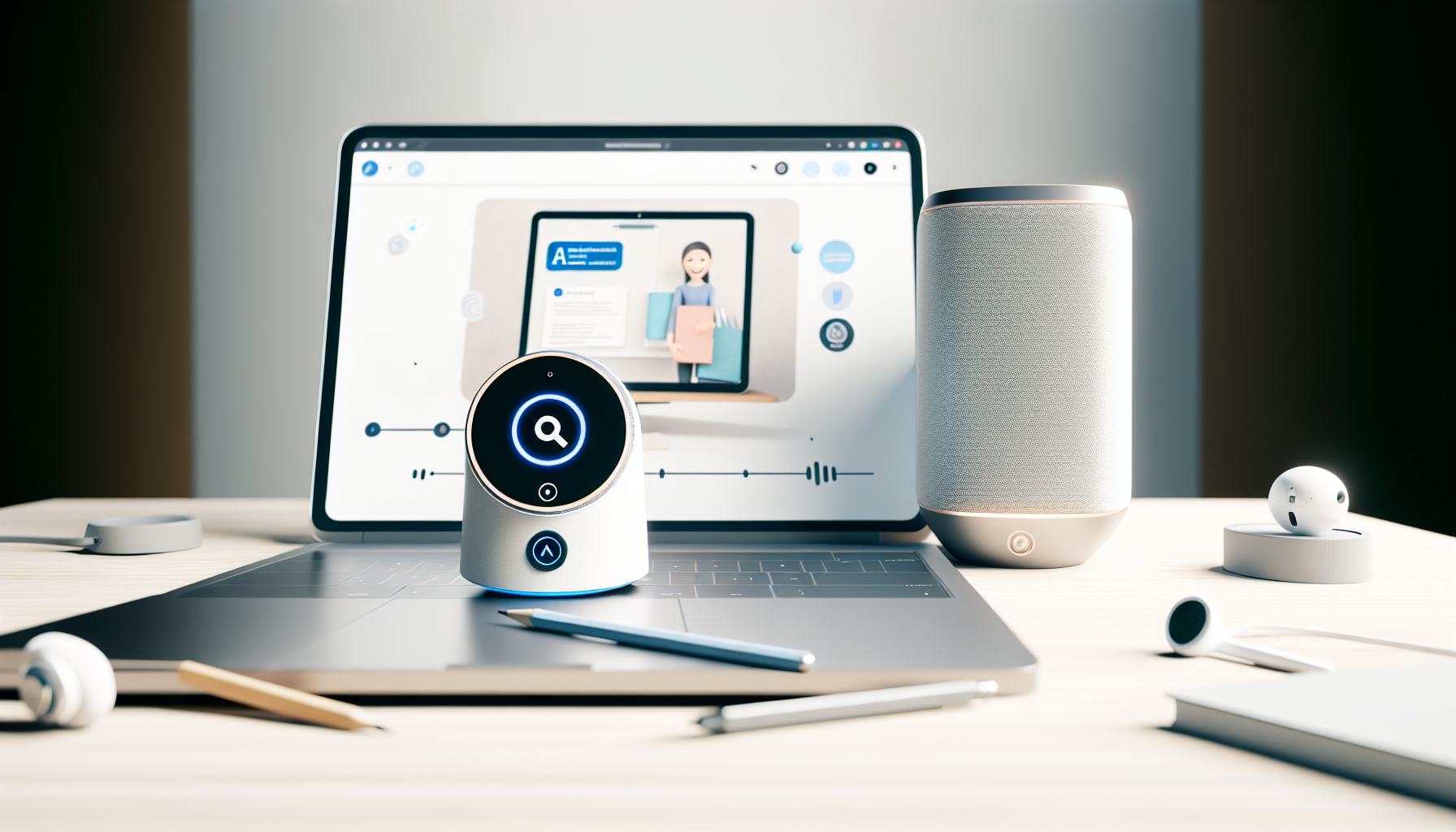
AI voice e-learning represents an exciting leap forward in how educational content is delivered. At its core, this innovative approach involves the use of artificial intelligence-enhanced voice technologies integrated into e-learning platforms. This integration transforms traditional learning into a more interactive, accessible, and personalized experience, making Text to Speech a cornerstone of educational engagement.
Significance of Voice Technology in Online Education
Voice technology in online education solves critical accessibility issues, allowing students with visual impairments to engage with content through auditory channels. It democratizes access for people with different learning styles as well as those from various linguistic backgrounds. The auditory e-learning experience extends the reach of knowledge, eliminating traditional barriers and making education global.
Current Trends in AI Voice Technology
In recent years, AI voice technology has surged in popularity within e-learning platforms. This shift has redefined how learners interact with content, offering personalized and dynamic learning environments. From real-time feedback to engaging storytelling in learning modules, the trend continues to grow, promising even more profound transformations in the educational landscape.
Understanding AI Voice E-learning
Definition & Components: Deep Dive into AI Voice E-learning
AI voice e-learning is a comprehensive system that utilizes AI-generated narration, Voice Cloning, conversational AI, and multilingual voice synthesis to bring educational content to life. These tools create digital replicas of instructors' voices and adapt dynamically to students' inquiries. Multilingual synthesis allows content to be delivered in over 30 languages, offering a personalized learning environment that meets diverse learner needs.
Integration into E-learning Platforms
The integration of AI voice technology into e-learning platforms fosters inclusivity by enabling interactive and personalized education environments. These platforms utilize voice cloning, which not only makes diverse linguistic support possible but also provides learners with a consistent voice experience across diverse content.
Key benefits include remarkable cost-effectiveness, cutting voiceover expenses by up to 50%. AI systems facilitate rapid audio production, allowing scalability to meet increasing demands without the need for costly re-recordings. This process ensures consistent quality in tone and style, making the learning experience uniform and professional.
Advantages of AI Voice Technology
- Cost-Effectiveness: AI technology cuts traditional recording expenses, offering a more budget-friendly solution.
- Scalability: Rapid audio content production increases the efficiency and reach of educational programs.
- Consistency: AI voices maintain uniformity in delivery, offering a cohesive learning experience.
- Customization: Emotional tones and emphases can be adjusted, making content relatable and engaging.
The Role of Voice Technology in Online Education
Advancements in Voice Technology
AI voice technology has evolved significantly, moving from simple, robotic tones to complex, human-like narrations. These advancements are powered by neural networks capable of replicating human speech patterns, allowing for nuanced and expressive audio that enriches the learning experience.
Enhancing Online Learning Environments with AI Voice
AI voice technology's impact on online education includes providing real-time feedback, supporting interactive tutoring, and allowing for personalized learning pathways. Students can benefit from instant clarification and reinforcement of lessons through dynamic interactions, while tutors tailor instruction to meet individual needs.
Significant improvements in educational environments arise from these advancements. For example, real-time interaction with AI tutors makes learning more immediate and personal. Moreover, personalization features ensure that learning is paced to individual learner preferences, adapting audio tone, speed, and language.
Platform Examples Pioneering AI Voice Solutions
Several companies, like ElevenLabs, Speechify, and WellSaid, exemplify the integration of AI voice technology in education. They provide solutions for varied educational sectors, including corporate training and online universities. Additionally, AI Dubbing offers advanced voice cloning over 30 languages, establishing a benchmark for multilingual educational support.
Benefits of Auditory E-learning Experiences
Enhancing Engagement and Retention
AI-driven voice tools have been shown to boost student engagement and academic performance. The inclusion of consistent auditory elements maintains interest and aids information retention over prolonged periods. Studies highlight significant improvements in multisensory learning, demonstrating effectiveness when combining visual and auditory input for better focus and retention.
Accommodating Diverse Learning Styles
AI voice technology supports auditory learners and extends its benefits to students with different learning styles. By providing audio-driven lessons, it helps cater to students who thrive on spoken information, meeting the varied needs of a diverse student population.
Fostering Accessibility and Inclusivity
AI voiceover supports those with visual impairments and reading difficulties, ensuring educational content is accessible to all. Multilingual voice generation increases inclusivity, accommodating learners from diverse linguistic backgrounds and breaking down language barriers in education.
Boosting Content Retention
Consistency in AI-generated voices, amplified by voice cloning, enhances content retention. This approach allows students to revisit lessons, listening to a familiar voice repeatedly, which helps retain information without distractions caused by tonal variations common in live recordings.
Case Studies and Examples Highlighting AI Voice Use
Implementation Examples in Education
Speechify stands out for its AI narrative transformations, turning written text into engaging audio content. Its narration style improves comprehension and retention, showcasing how auditory learning can enhance understanding. Similarly, ElevenLabs provides adaptive and engaging course content, ensuring consistency in corporate training and online learning setups.
Smallest.ai's Voice Cloning API caters to a global audience by allowing educators to customize content perfectly for diverse linguistic needs. This flexibility and precision ensure their educational material resonates with learners worldwide.
Success Stories Involving AI Voice Technology
While specific testimonials are scarce, the consensus from institutions adopting these platforms is clear: AI voice solutions result in improved student engagement, greater accessibility, and better educational outcomes. These tools hold the promise for broader educational access and higher learning efficiency.
Challenges and Considerations in AI Voice E-learning
Navigating Implementation Challenges
As AI voice e-learning proliferates, challenges such as homogenized experiences and diverse content quality remain. While AI provides a consistent learning narrative, variations and emotional nuance must be effectively managed to prevent monotony.
Addressing Ethical and Privacy Concerns
Ethical considerations play a significant role in voice cloning technology. Securing learner data and ensuring responsible AI deployment are crucial. Institutions should establish robust policies around voice cloning to prevent misuse and preserve original instructor identity integrity.
Technological Limitations and Future Opportunities
To optimize voice technology, ongoing challenges like technical terminology precision and accent representation need addressing. Overcoming latency issues for real-time interactions is also essential. Yet, the future holds many exciting prospects, including NLP advancements and VR/AR integrations, promising richer and more interactive learning experiences.
Future of AI Voice in E-learning
Exploring Emerging Trends
Technological advances continue to bolster AI voice e-learning. Current trends suggest further improvements in NLP, providing natural, human-like interactions. Expansion into more languages and integration with VR/AR technologies points to even more immersive learning experiences ahead.
Potential Impacts of AI Voice
As AI voice continues to evolve, its potential to revolutionize education on a global scale becomes increasingly apparent. Enhanced personalization and engagement will transform access to education, breaking geographic borders and enabling universal learning.
Closing Thoughts on AI Voice E-learning
AI voice e-learning is shaping up to become a fundamental element in educational innovation, offering a personalized, interactive, and inclusive learning approach. By closing the gap between learner needs and educational delivery, AI voice ensures that educational institutions can foster better learning outcomes for all students.
Encouraging the adoption of AI voice technology by educational entities stands to greatly improve the quality and reach of learning experiences, preparing educational systems for the future.
A Call to Action for Educators and Learners
Educational institutions and their stakeholders should actively explore the integration of AI voice solutions to enhance learning environments. Whether sharing experiences or seeking new strategies, engagement with AI voice technologies can lead to a transformative shift in education, paving the way for a more inclusive, efficient, and accessible future for learners worldwide.