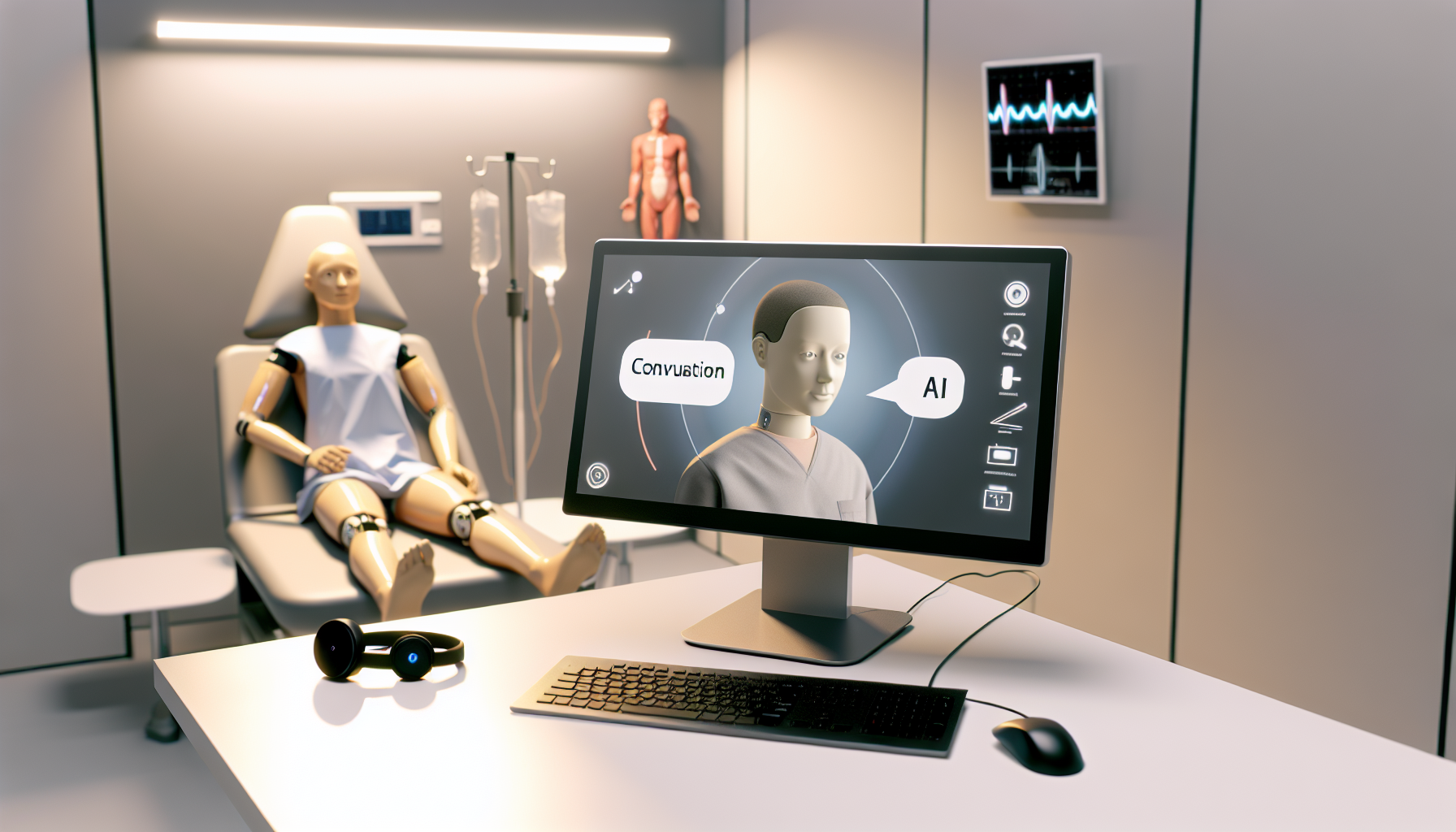
The integration of AI voice medical education into the learning sphere is reshaping healthcare instruction with its interactive and hands-free features. By leveraging the power of AI voice technology, educators and trainees are experiencing a revolution in healthcare training and simulations. This advancement not only fosters engagement but also facilitates skill development in a way that traditional methods may not.
AI voice technology in medical education utilizes sophisticated tools like voice synthesis, voice cloning, and conversational AI. These create realistic patient interactions and offer personalized, immersive training experiences, thereby enhancing the learning environment for medical students and professionals alike.
Understanding AI Voice Technology
To understand how AI voice technology is driving innovation in healthcare training, we must first recognize its core components. These include voice synthesis, voice cloning, and text-to-speech synthesis. These elements work together with large language models (LLMs), like ChatGPT, to facilitate natural spoken interactions.
Voice synthesis and cloning utilize deep learning algorithms to replicate human speech patterns. Platforms like ElevenLabs offer text-to-speech applications that mimic human accents with remarkable precision. Such technology marks significant progress from the days of basic text-to-speech systems, evolving into more interactive and personalized solutions like voice-activated assistants.
As AI in medical simulations becomes increasingly sophisticated, it's evident that voice technology healthcare training is rising to new heights. It allows for seamless integration into everyday medical scenarios, promoting active learning and student engagement. This evolution is not just about technological advancement; it’s about fundamentally transforming the pedagogical landscape of medical education.
AI Voice Medical Education: An Overview
AI voice technology is playing an essential role in supporting medical education through innovative tools and methods. It enhances the educational experience with voice-based tutoring, interactive simulations, and opportunities for practicing patient communication.
Incorporating AI voice technology into medical curricula enables the use of tools such as virtual patients (VPs) and standardized patient LLMs for immersive healthcare training. These technologies simulate consultations and help students refine their communication skills. Institutions like Harvard Medical School have successfully integrated customized SP-LLMs to facilitate voice and text interactions during history-taking and management training.
The implementation of AI voice medical education is thus a game-changer, providing a platform where students can practice real-life medical scenarios in a controlled, forgiving environment. It prepares them for the complexities of patient interactions and offers a glimpse into the dynamic world of patient-focused healthcare.
Benefits of AI Voice Technology in Medical Education
The incorporation of AI voice technology into medical education presents several tangible benefits that extend beyond traditional teaching methods.
- Enhanced learning: Voice-driven lessons allow learners to engage hands-free during medical procedures, making room for more focused and uninterrupted practice. Quizzes and verbal clinical reasoning exercises help to reinforce concepts through verbal interaction, fostering a deeper understanding of subject matter.
- Personalization of training: Self-voice cloning can be utilized to improve retention and satisfaction. By mimicking the learner's voice, AI creates an engaging and relatable learning experience compared to the depersonalized nature of conventional teaching materials.
- Increased accessibility: It supports visual and motor-impaired learners by providing alternative ways to access information. For non-native speakers, the practice of medical terminology through voice interactions is invaluable. These immersive simulations cultivate effective communication skills—an essential component of patient care.
Through these benefits, AI voice medical education is setting a new standard for training future healthcare professionals. It not only enhances their skills but also equips them with the confidence to excel in clinical settings.
Voice Technology in Healthcare Training
Voice technology healthcare training allows for the simulation of real-world scenarios, providing trainees with hands-on experience in a safe, controlled environment. It facilitates the practice of issuing spoken orders and receiving real-time feedback, honing their ability to communicate effectively under pressure.
Evidence from studies suggests that AI voice training significantly improves outcomes for learners. Research has shown improved compliance rates, reduced anxiety, and higher quality-of-life scores for those who have undergone AI-based training. Institutions like Weill Cornell's MedSimAI utilize these technologies for simulated telehealth interactions, allowing students to practice empathetic communication.
The effectiveness of such technologies in healthcare training is further underscored by high fidelity and usability ratings from users, highlighting the fact that AI voice systems are fostering comfort and confidence among medical trainees. By allowing students to engage fully with clinical scenarios, voice technology is driving practical and meaningful learning experiences.
AI in Medical Simulations
AI voice technology is paving the way for revolutionary medical simulations. By creating highly realistic, voice-modulated patient scenarios, it enhances skill transfer from the classroom to actual clinical settings.
These advanced simulations provide trainees with opportunities for low-stress diagnosis practice and comprehensive communication feedback. This innovative approach is integral to developing adept, confident medical professionals who are prepared for real-world patient care.
Harvard's use of SP-LLMs and ElevenLabs-powered virtual patients exemplifies how AI in medical simulations can create immersive educational experiences. By harnessing natural synthesis, students can engage with AI-generated scenarios that mimic real patient interactions, fostering deeper learning.
This immersive educational approach, aided by AI voice medical education, is transforming the medical field by aligning training methods closely with the realities of clinical practice.
Challenges and Considerations
Despite its promise, the adoption of AI voice technology in medical education comes with challenges that must be addressed to capitalize on its full potential.
Technical reliability is a primary concern. Issues like speech recognition accuracy or integration problems can hinder effective implementation. To ensure seamless adoption, institutions must invest in robust technical infrastructure and reliable software solutions.
Ethical and privacy considerations also pose significant challenges, particularly regarding voice cloning and the storage of sensitive patient data. Institutions must prioritize the security of data storage and ensure compliance with privacy regulations to prevent misuse. This includes validating prompts and seeking expert verification to maintain ethical standards.
As these challenges are addressed, healthcare educators can expect to safely and effectively incorporate AI voice technology into their curricula, unlocking new possibilities for student training.
Future of AI Voice in Medical Education
Looking forward, AI voice technology promises to further revolutionize medical education. Emerging trends indicate that voice AI will become an integral component of hands-free, scalable simulations and tutoring.
The continued development and integration of LLMs will pave the way for curriculum-specific tools that offer even more customized learning experiences. These advancements hold the potential to fundamentally alter the landscape of medical education, preparing students for successful careers in healthcare.
Long-term benefits include enhanced verbal skills, empathy training, and improved healthcare outcomes due to more proficient communication. As AI voice medical education technology continues to evolve, its impact on the future of healthcare training will be profound and far-reaching.
Conclusion
AI voice technology is on the cusp of transforming medical education by offering customized, immersive training experiences that enhance retention and skills. This technological evolution signifies a shift in how future healthcare professionals are trained.
By integrating cutting-edge AI voice tools into classrooms and clinical simulations, medical educators are preparing learners to become confident, effective practitioners. The transformative potential of these technologies holds the promise of better patient outcomes and a more adept healthcare workforce.
Call to Action
With the growing impact of AI voice technology in healthcare training, institutions and educators are encouraged to explore its potential applications. By utilizing tools like MedSimAI or collaborating on SP-LLM projects, opportunities abound for advancing healthcare training practices.
For those interested in delving further into the possibilities of AI voice technology, exploring voice cloning platforms and custom simulation tools is a logical next step. The future of medical education is rapidly advancing; now is the time to embrace these innovations and shape the future of healthcare.